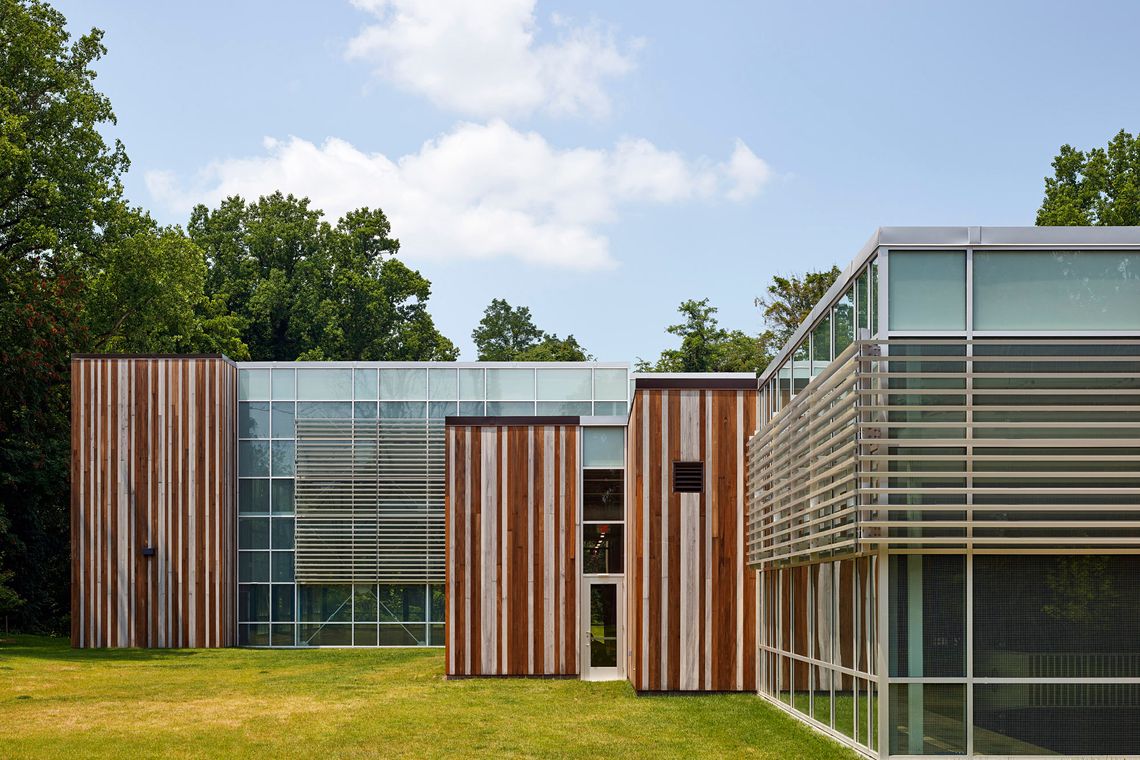

Originally published in the November/December 2025 issue of "Legacy," the magazine of the National Association for Interpretation.
As the United States enters the year 2026, we will commence celebrating a cycle of sestercentennials, or 250th anniversaries, of historic and cultural events across the land. These anniversaries commemorate events dotting the American landscape and calendars, reminding us of national achievements, tragedies, and triumphs that continue to shape our identity and values.
As our country looks back, experience has taught us that it’s imperative that we keep this history in view, while also putting it in perspective. Monuments, landmarks, battlefields, whole landscapes, sites of struggle, of loss and of victory—all of these require a new spatial framework, one that can transmit their meaning, not just to the present generation, but to generations to come. Fortunately, architecture puts at least one invaluable tool at our disposal to further explore these relationships and foster productive and inclusive discourse. Combining education with amenities, interpretive centers offer an architectural way to merge site, building, and exhibit design and thereby fully immerse visitors in their encounters with history.
Most people have been to an interpretive center of one kind or another. In its simplest form, it’s familiar to any child who recalls—as I certainly do—being dragged off by their parents on a long vacation drive, and stopping along the way at various spots of natural or historical interest. There, at the far end of the parking lot, was the visitor center; usually a modest, boxy affair, the building would often include a few dimly lit, not-very-engrossing exhibition displays, a gift shop packed with themed keychains and shot glasses, and perhaps a little literature and a few basic services to help guests navigate the site. They might not always have been inspiring, but those buildings succeeded on those terms at least, and they paved the way for what we refer to as “interpretive centers” today.


Beginning in the 1990s, the designers at GWWO started to think about this typology of interpretive centers in a new way. Put succinctly, while a visitor center is typically little more than a nondescript box with information inside it, an interpretive center provides a comprehensive informational environment that begins with the building and its surroundings then extends to every aspect of its interior. An example of the progression to a modern interpretive center can be seen through GWWO’s design of the new Ralph C. Wilson, Jr. Welcome Center at Niagara Falls State Park.
First established in 1885 as the Niagara Reservation, Niagara Falls State Park has a vast history that encompasses generations of stories, including its discovery by Indigenous peoples, legendary Daredevils who traveled over the falls, Harriet Tubman’s crossing as part of the Underground Railroad, and its suffering because of the Industrial Revolution, which led to its preservation by the state. Annually, over nine million people travel to the park—the most visited in New York and the oldest state park in the US—to witness the 3,160 tons of water that flow over the falls every second. The existing visitor center, built in 1988, was insular and inward looking, forcing visitors through a prescribed path that left them exhausted and confused as they attempted to navigate the poorly organized facility to reach their ultimate destination: the falls. Working closely with the New York State Office of Parks, Recreation & Historic Preservation, GWWO’s primary goal in designing the new interpretive center was to elevate the visitor experience into one worthy of the grandeur of the falls.
Choose Your Own Adventure
As was the case with the former Niagara Falls Visitor Center, older visitor centers were often located near the historical site but with no organic relationship to it; now, the focus is on forging a vital connection to the site and employing intuitive wayfinding to allow visitors to choose their own adventure.
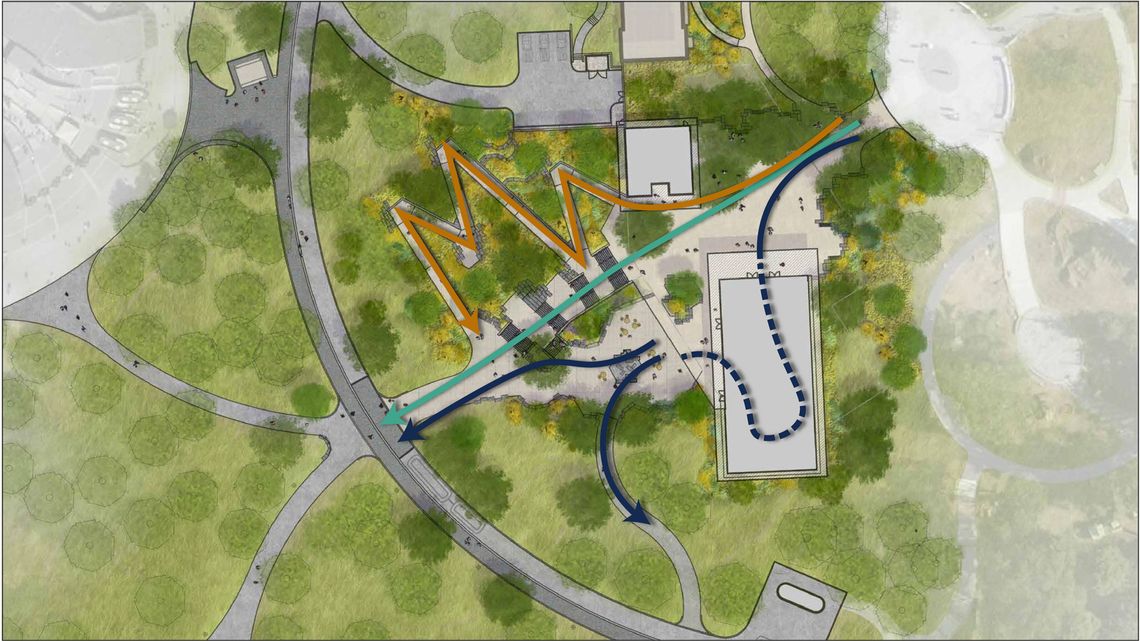
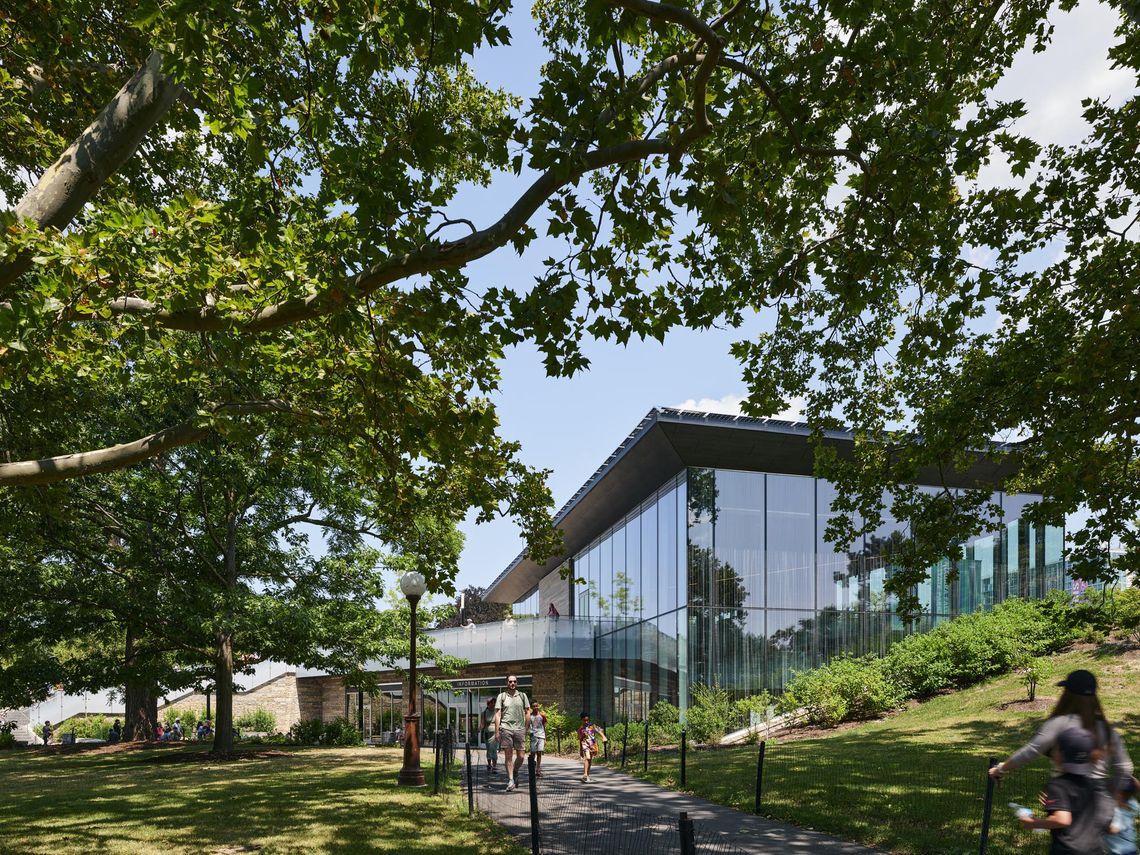
Placing the awe-inspiring beauty of the Niagara River Gorge and immense power of the falls at the forefront, the new interpretive center is a quiet form nestled into the sloped site that now frames views of the head of the falls instead of blocking them. Rather than being forced through the building in a single, overcrowded route, the center offers direct, restorative, and educational route options as visitors move through the various amenities to ultimately reach the falls.
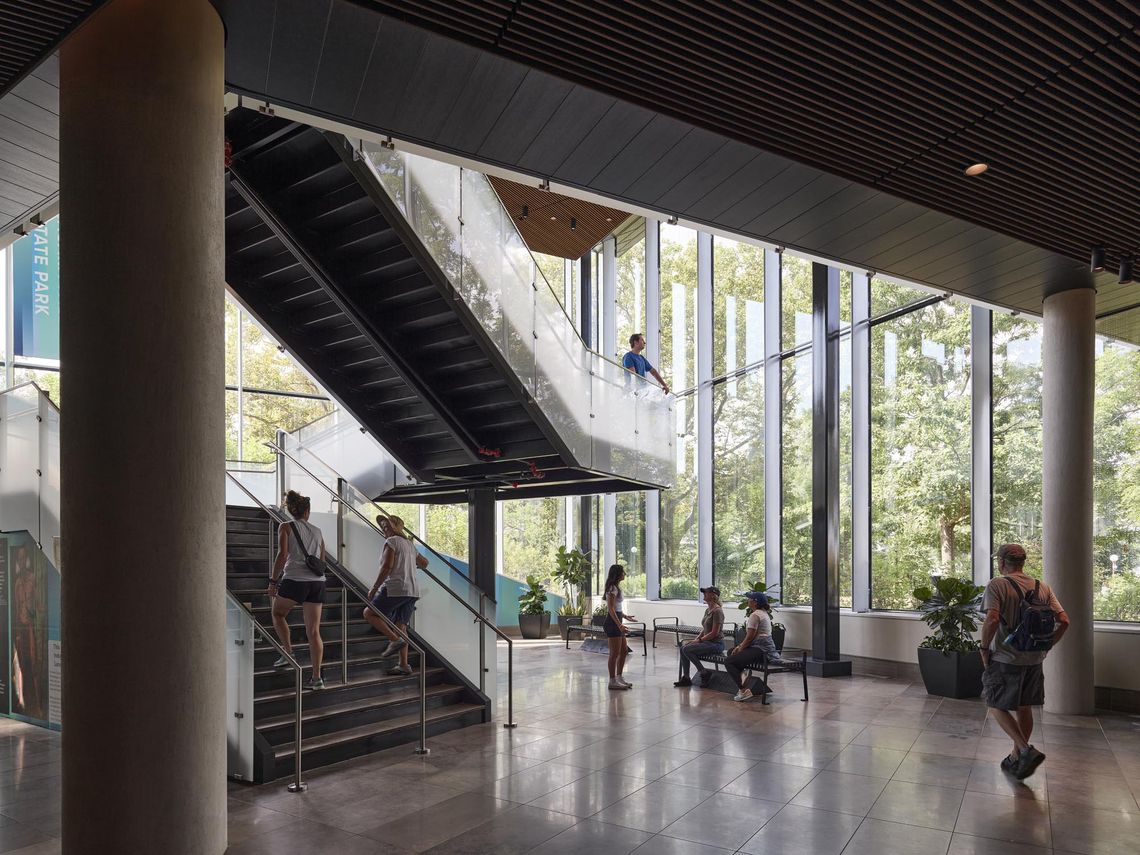
Upon exiting the formal entrance ellipse from the City of Niagara Falls, visitors can see three distinct destinations: the falls, the restroom building with additional external orientation, and the welcome center. This clarity of destination allows visitors to navigate the site easily and intuitively, and to choose their own journeys of discovery, whether that be a direct route to the falls; a meandering path for those who wish to wander, inhabit, and discover; or a linear and detailed experience for those seeking an in-depth understanding.
No matter the path, visitors are taken on a journey through time that spans the eras of geological formation, highlights the flora and fauna of the region, and examines the eventual human impact on the falls, bringing to life the many voices and perspectives of those who have experienced their grandeur.
Telling a Site’s Story Through Design
The goal in all of GWWO’s interpretive projects is to embrace nature and history through an array of strategies that can further a visitor’s understanding of the site, turning the encounter with the past into a moving, transformative experience. At Niagara, the newly designed interpretive center and site are a source of inspiration and spark curiosity by allowing the stories of Niagara Falls and the Niagara Gorge to be expressed in every detail of the building and site.
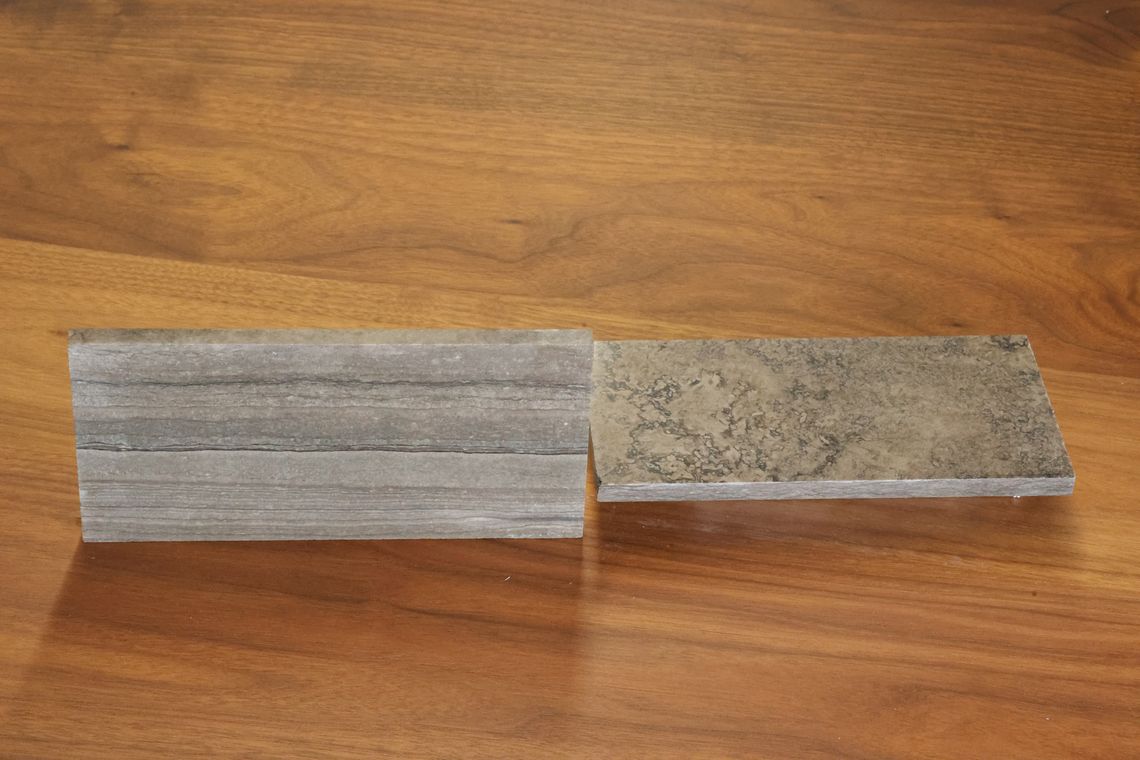
This process begins with a design that is rooted in nature. The building’s simple, horizontal form reflects the calm of the river before it rushes towards the gorge, while subtle nods to the geology and history of the region can be found in the detailing of the building’s floors, walls, and roof overhangs. Limestone sourced from the Niagara Escarpment visually connects the design to its geological setting with floor slabs cut horizontally (fleuri-cut) and exterior and interior wall stone cut vertically (vein cut) as if the building was carved out of the earth, just as the gorge was carved out over time by the power of the Niagara River. Blackened metal soffits with openings to expose bi-facial solar panels harken back to the region’s industrial history.
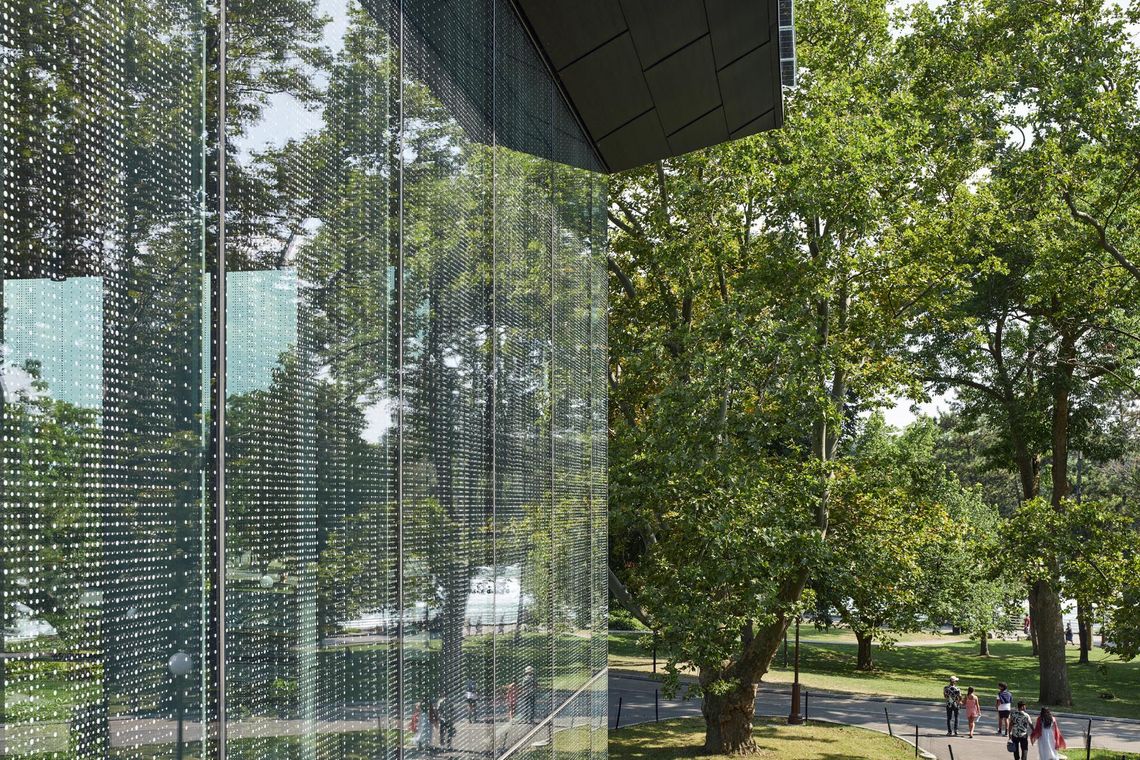
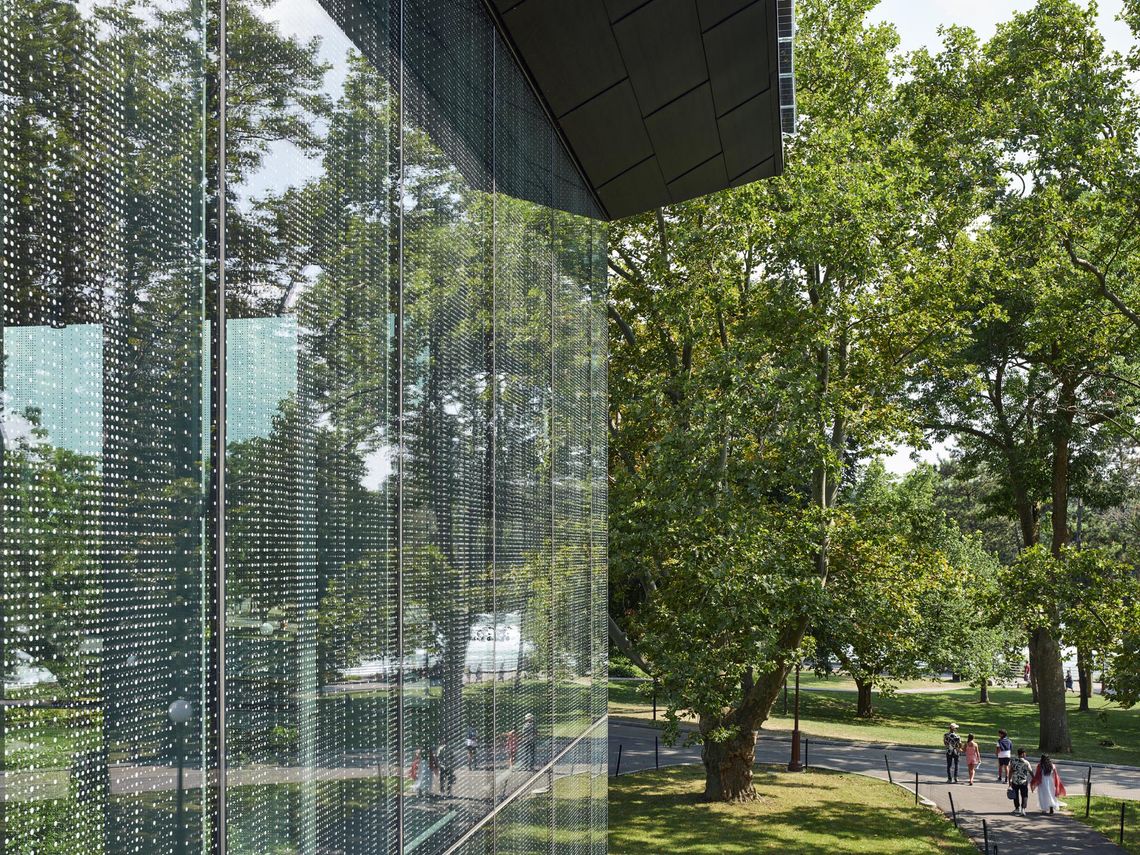
Perhaps less subtle is the use of jumbo glass—like a giant sheet of water—on the building’s expansive facade to maximize visual connections to the falls as visitors move through the building. As Niagara Falls State Park and the Niagara River comprise a globally significant Important Bird Area (IBA), attracting over 200 species of birds throughout the year, we took the opportunity to create a custom frit pattern that furthers the center’s interpretation and is a visible barrier to birds. The pattern represents an abstraction of the fluid and powerful movement of the falls overlaid on a 2x4 grid of dot spacing to reduce bird strikes. Computational design shaped the forms and patterns with algorithms, translating the rhythm of Niagara Falls into a custom arrangement of ceramic dots printed on the curtain wall glass. The resulting “waterfall frit” pattern not only mimics the natural movement of cascading water, but reduces glare, deters bird strikes, and enriches the experience for visitors, revealing new layers of detail as light and viewpoints shift.
Co-Creation
Ensuring that a curatorial message is inclusive—that everyone is present and accounted for, most of all those who were traditionally left out of the historical conversation—makes it all the more important to create interpretive centers that present different points of view.
Architects don’t create these curatorial messages, nor do exhibit designers. Rather, we tell these stories, and in their telling we rely on experts in the respective fields and the people who lived it, or are descendants of those that did, to share their experiences and perspectives and educate all of us in order to create a new path for understanding our shared histories. This is a highly inclusive process that ensures stories are told from various vantage points.
In telling the Niagara Falls story, it was imperative to highlight a diversity of topics including the site’s natural, industrial, and Indigenous American history. The design team connected with local historians, residents, and members of the Seneca Nation and Tuscarora Nation to create a holistic experience that roots visitors in an understanding of the past, present, and future. Among the priorities was the idea of “co-creation,” that is having the nations themselves engaged to co-create graphics and exhibits that tell the stories of the region as it was first known.
Upon entering the exhibit area, visitors are introduced to this curatorial approach and process of co-creation. As an example, a visitor’s journey begins with a greeting by a Onödowáʼga leader—the Seneca Nation that was and is still known as the “Keepers of the Western door”—as early explorers and visitors would have been welcomed to the land. This expression marks the beginning of the story being told and signals to the visitors that their interpretive journey will be a more nuanced version of the story of Niagara and its people. Ultimately, the project connects people to the landscape and the complex stories that surround and define the spectacular falls and highlights the voices of the people who define this place.
The stories told at the new welcome center at Niagara Falls are just one example of how architecture can illuminate the richness of the American landscape and the perseverance of those who first inhabited it and cultivated it.
We have built our practice at GWWO around telling America’s stories through architecture—borne of a progressive typology rooted in and respectful of the past—where history, culture, and the best characteristics of humanity are embodied in evocative and inspirational design solutions. Taking the best developments in interpretive center design to date, and combining them with some of the most promising trends now emerging in the field—incorporating new forms of technology; forging connections between institutions and sites; and encouraging visitors to shape their own experience—interpretive centers can provide a rich and lasting impact on visitors of all demographics.