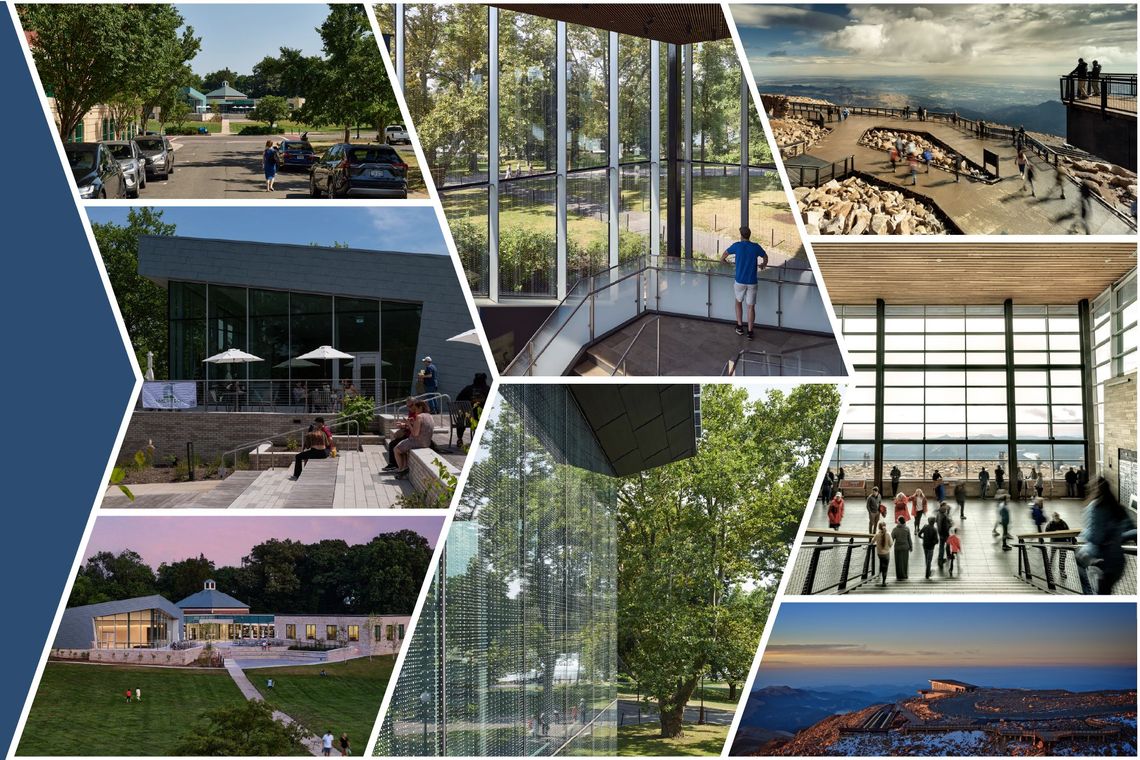
On September 18th, we celebrated in both the Centennial State and the Old Line State as three museum and visitor center designs were honored by AIA Colorado and AIA Maryland.
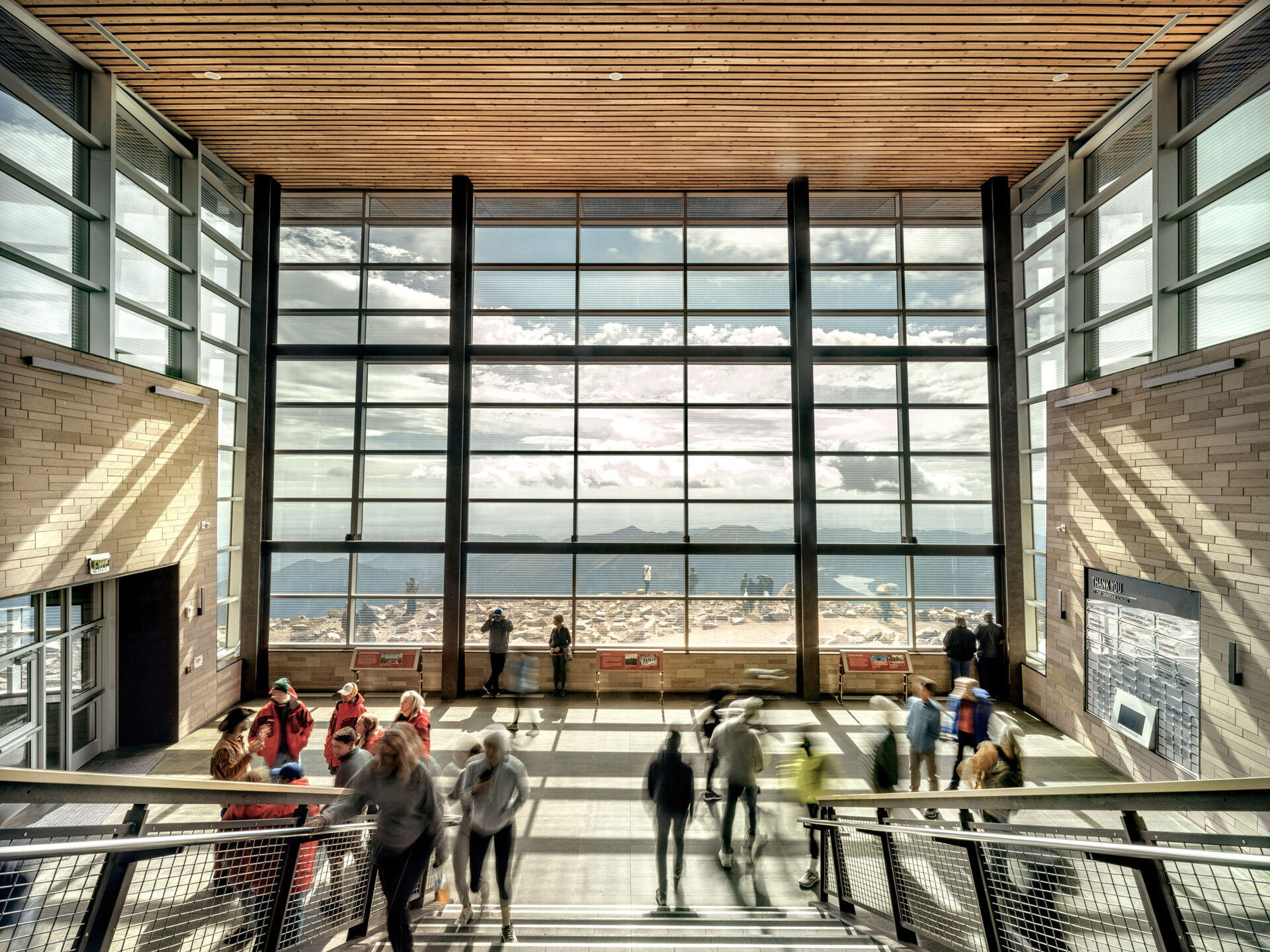
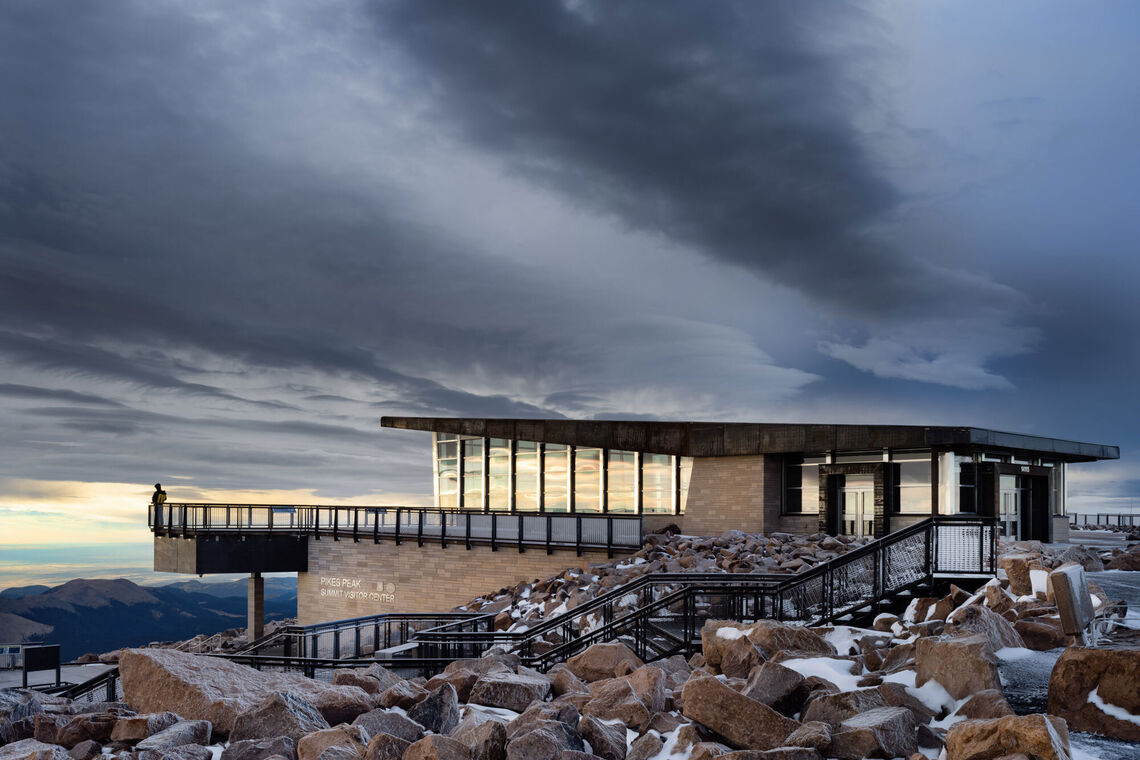
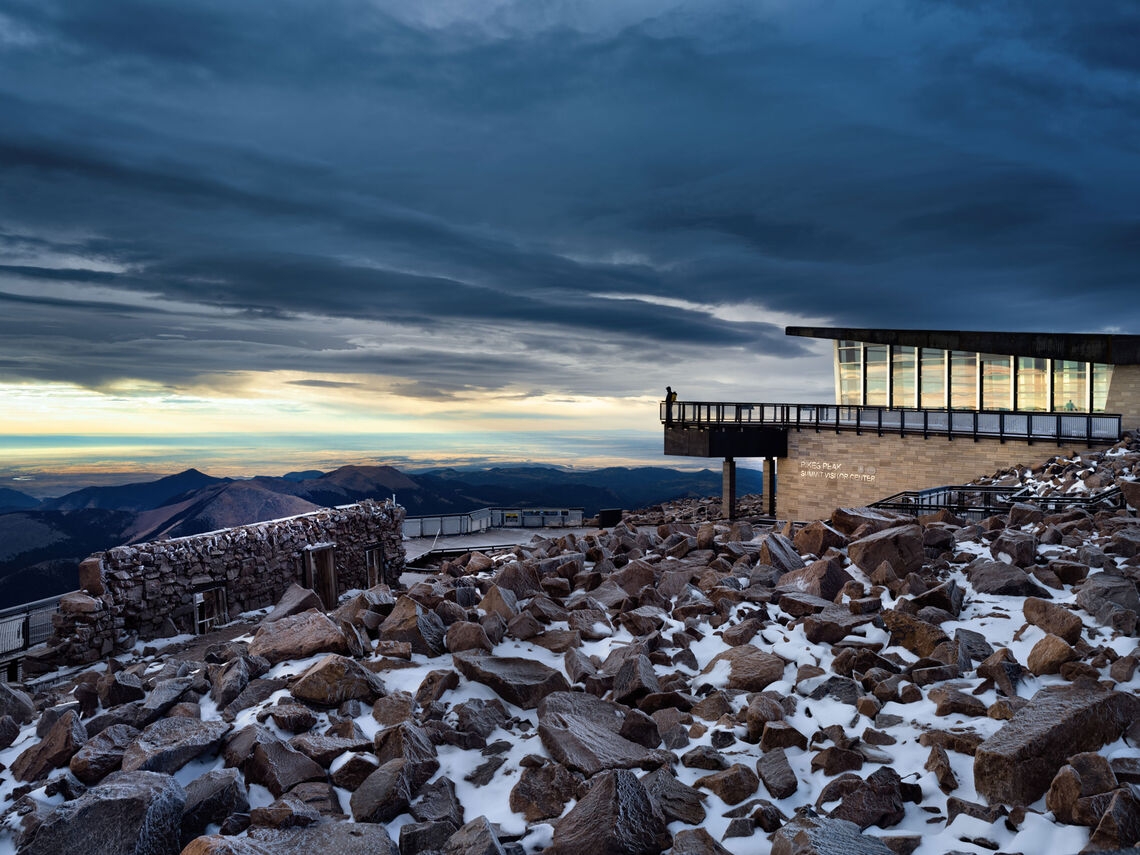
The Pikes Peak Summit Visitor Center, designed in associate with RTA Architects as Architect-of-Record, received an Award of Merit and sustainability recognition from the 2025 AIA Colorado Design + Honor Awards Jury.
Perched atop Pikes Peak, the world’s highest visitor center seamlessly blends into its alpine surroundings while offering a fully accessible immersive experience. Informed by 20,000 public comments, the design honors Indigenous history and the mountain’s expansive views. This iconic site required thoughtful planning to meet constructability challenges at high altitude and to complement the experience of the inspired setting. Built to endure harsh conditions, the net zero facility sets a new standard for sustainability, visitability, and site stewardship at 14,000 feet.
Members of AIA Maryland gathered in Baltimore to celebrate the organization’s annual Excellence in Design Awards where this year’s jury from AIA Pittsburgh reviewed 145 entries.
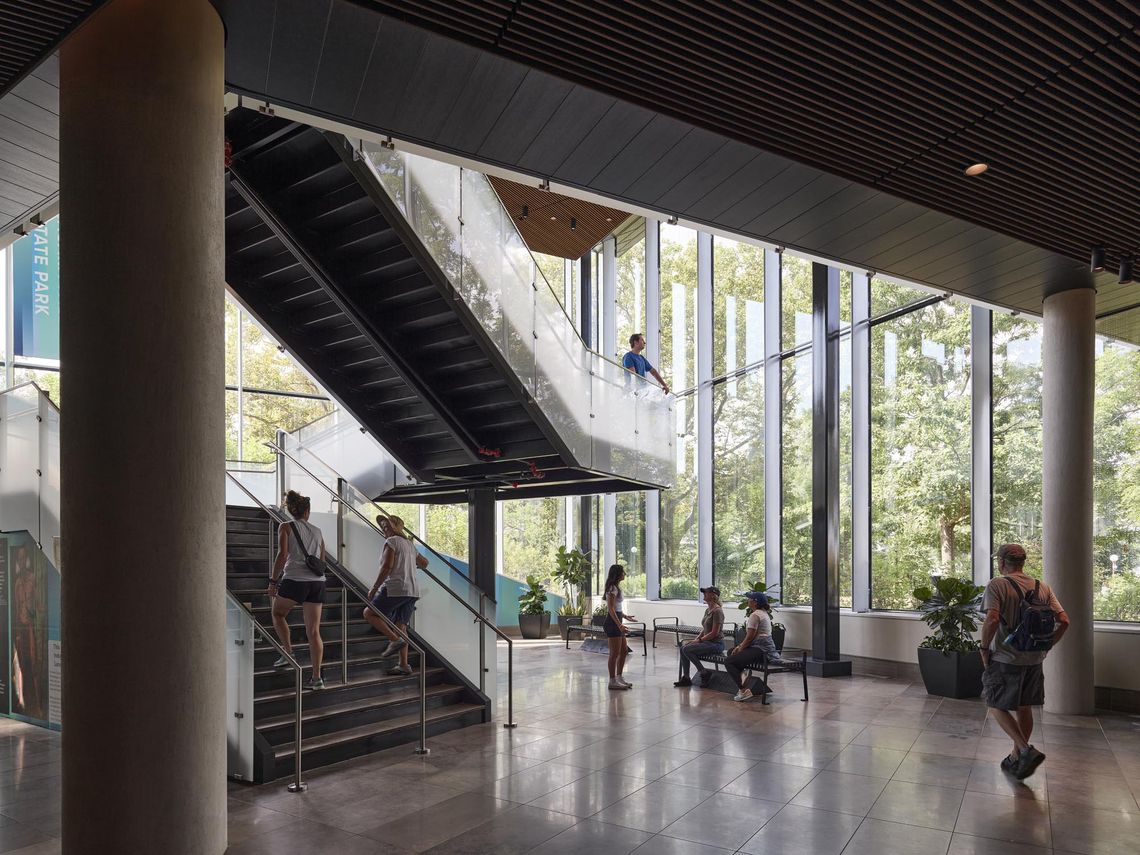
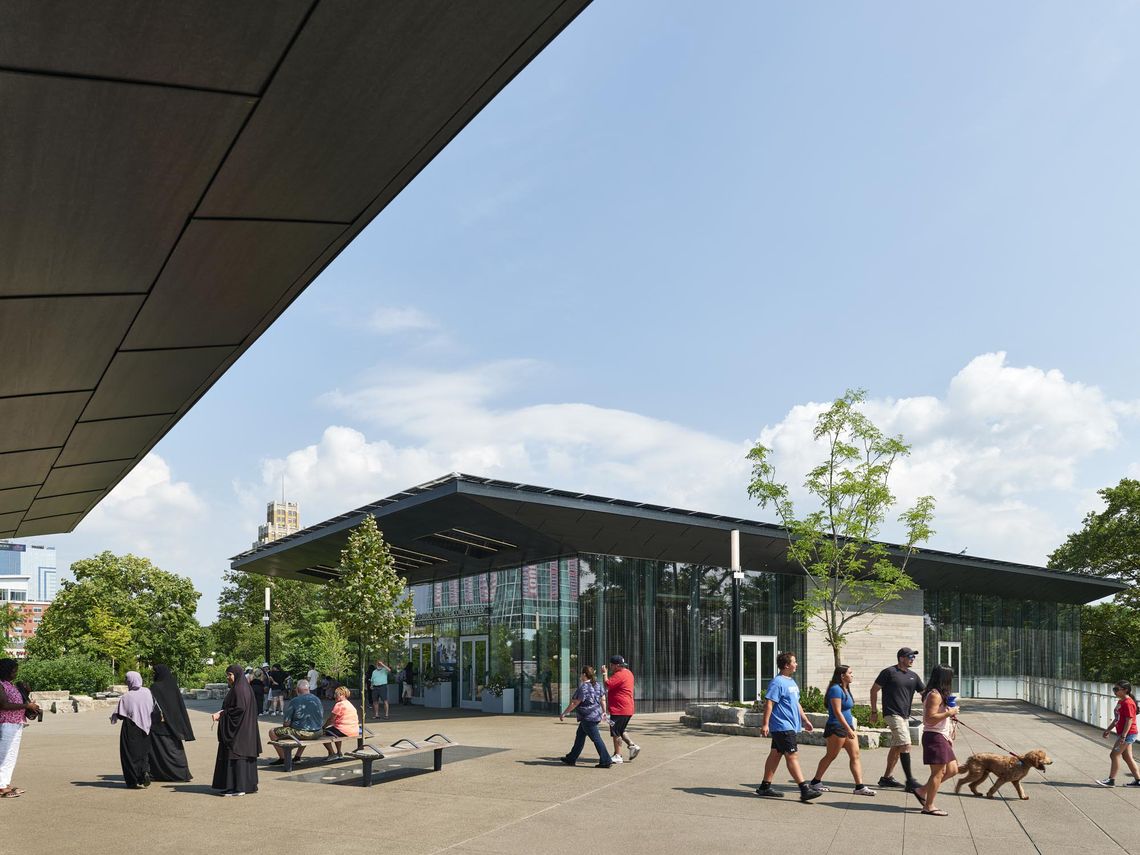
The Ralph C. Wilson, Jr. Welcome Center at Niagara Falls State Park received an Honor Award in the Institutional Architecture category for its design that places the awe-inspiring beauty of the Niagara River Gorge and immense power of the falls at the forefront, framing views of the head of the falls and offering several intuitively clear pathways to the falls.
The jury stated: “At first, we weren’t sure if this building was a little too safe or just appropriately understated. One look at the skyline across the river, however … well, let’s just say understated is a sincere compliment. We liked the PV array peeking over the edge of the roofline, and the bird-friendly gradient frit on the windows and guardrails subtly reminded us of falling water and spray. The building is at once modern and timeless, and the site design reinforces the building’s contextual use of materials. Together, site and building create an exceptionally well-curated and holistic visitor experience.”
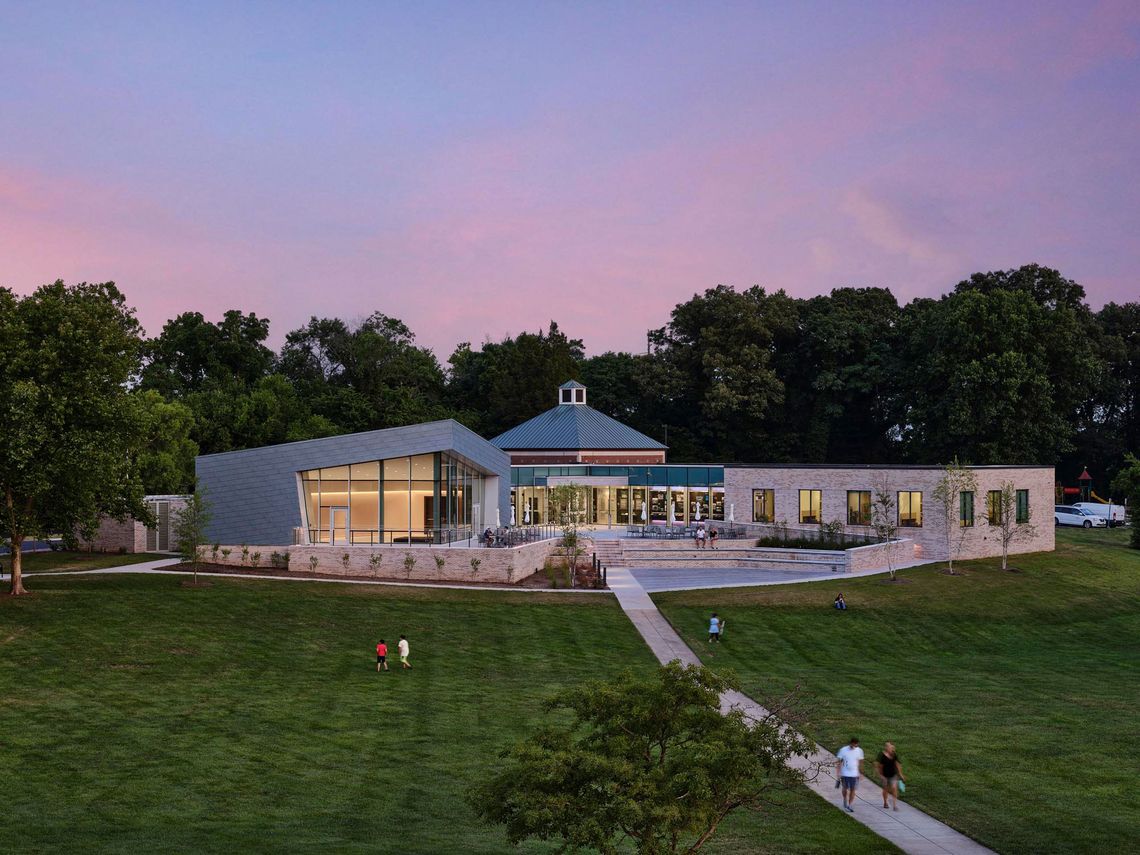
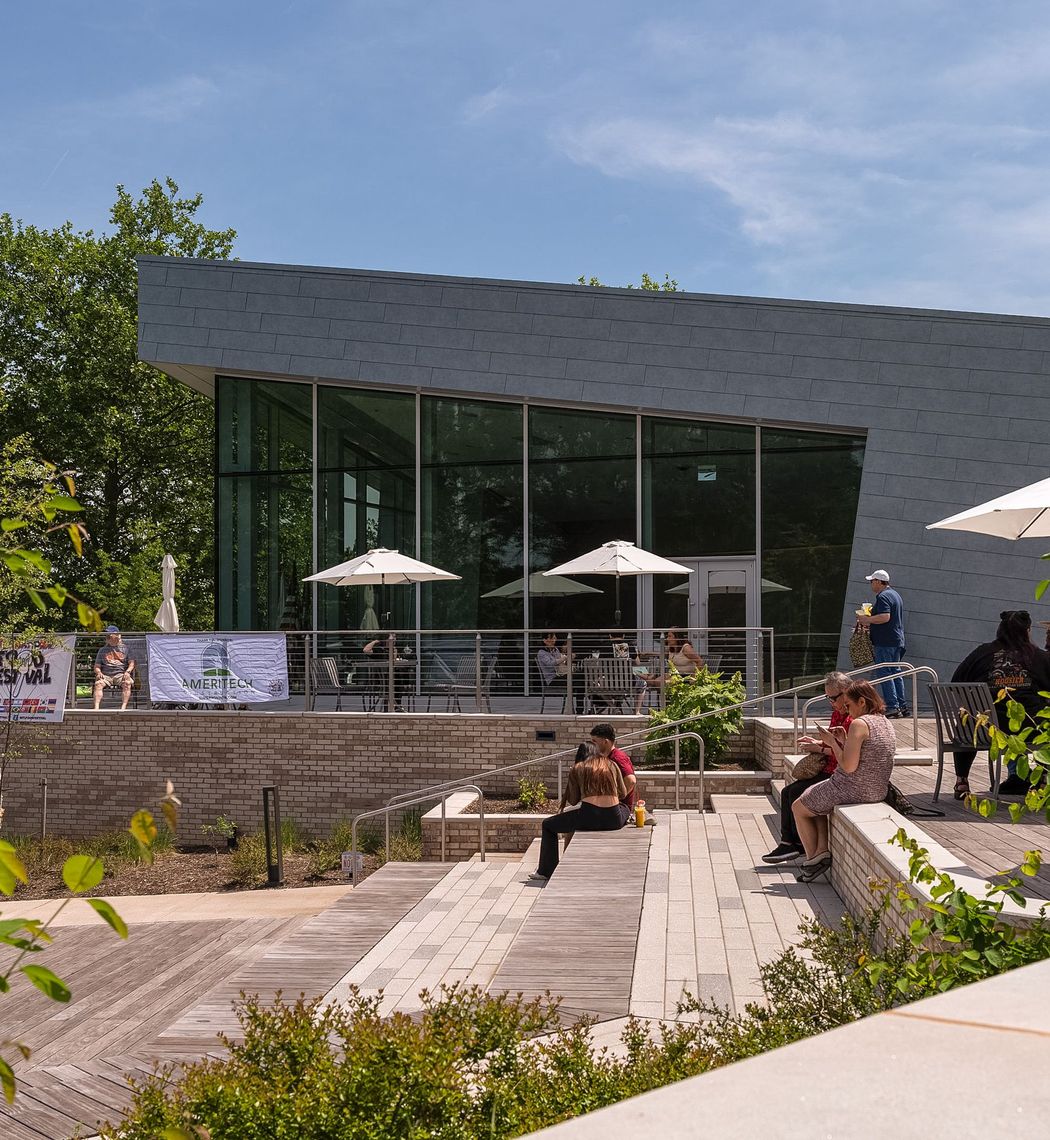
Also in the Institutional Architecture category, the Manassas Museum received a Citation Award for the design of the renovation and addition that transformed the physical relationship between the museum, park, and city by removing an existing inward-facing courtyard wall and siting the addition to engage the community, fully activate the town green space, and encourage visitor flow into the exhibits.
“It is rare to see an art gallery frontage so visible to the public—a bit more like a botanical garden entry. The removal of the site wall was exceptionally impactful, opening the museum to the park and elevating the museum’s presence, particularly in the view from the town. Programming the amphitheater for the town is a wonderful modernization of a traditional community gathering space. Simultaneously recognizing African American and Indigenous cultures with the renovation imbues the architecture with greater meaning—this really is a place for all” said the jury.